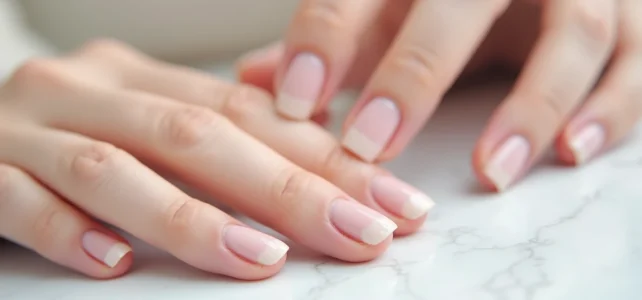
After the removal of semi-permanent nail polish, the surface of the nail may appear whitish, sometimes uniform, sometimes in patches. This whitening has a specific name in dermatology: pseudoleuconychia. Unlike true leuconychia (where the spot originates from the nail matrix), pseudoleuconychia is a superficial alteration of keratin, localized on the outer layers of the nail plate. The distinction between the two guides the entire subsequent management.
Pseudoleuconychia after semi-permanent: a surface issue, not a matrix one
The keratin that makes up the nail is organized in overlapping layers. During the application of semi-permanent nail polish, a light filing (buffing) prepares the surface to promote gel adhesion. This buffing removes a fraction of the superficial layers.
Further reading : 3 Essential Gardening Tools You Must Have If You Own a Garden
The problem mainly arises during removal. Prolonged soaking in pure acetone dehydrates the remaining keratin. The water molecules trapped between the layers evaporate, creating micro-pockets of air that diffract light. The nail appears white, matte, and sometimes chalky to the touch.
This phenomenon is reversible. In a few days to a few weeks, the keratin naturally rehydrates and the whiteness fades. A detailed article explains why white nails after semi-permanent polish do not, in most cases, indicate a pathology.
Further reading : What are the advantages of using a laser printer?
Dermatologists note that the whiteness disappears faster when pure acetone is replaced with removers formulated for gel and when the prior buffing before removal is reduced.
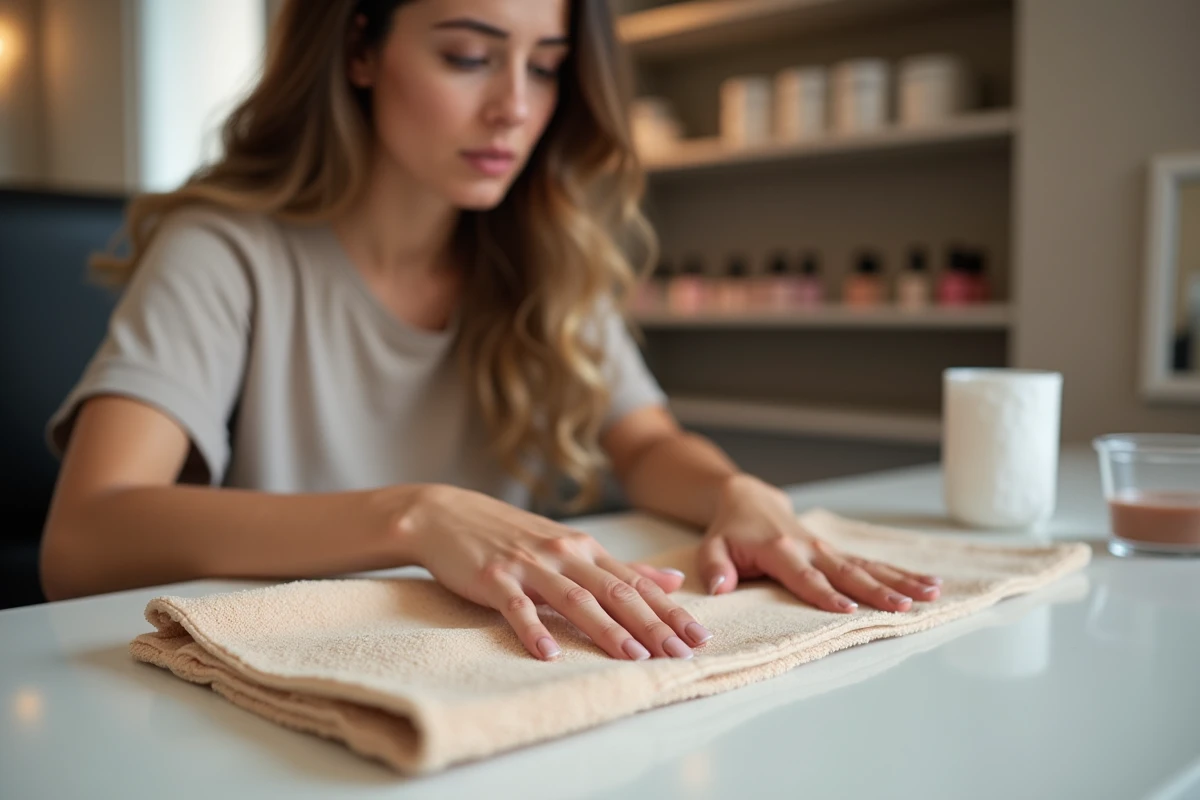
True leuconychia or pseudoleuconychia: how to differentiate on the nail
The confusion between the two forms is common and leads to inappropriate care. Here are the criteria that separate them.
- Pseudoleuconychia is located on the surface: very gentle buffing can reduce or eliminate the whiteness. The application of oil temporarily makes the whitish appearance disappear by optically filling the micro-pockets of air.
- Punctate leuconychia (small white spots) results from a micro-trauma to the matrix. It grows with the nail and disappears when the area reaches the free edge, without any specific treatment.
- Total leuconychia, where the entire nail becomes opaque white, is rare and requires a medical evaluation. It may signal a systemic or hereditary disorder.
The simplest test remains the oil test: place a drop of vegetable oil on the white area. If the whiteness temporarily disappears, the cause is superficial (dehydration). If the whiteness persists, the alteration is deeper.
Fungal infection or dehydration after semi-permanent polish: the trap of late diagnosis
A powdery, white, and persistent appearance after removal may also correspond to a superficial white fungal infection (mycotic leuconychia). Dermatologists emphasize the need to differentiate pseudoleuconychia from dehydration and fungal infection after semi-permanent polish.
Semi-permanent polish creates a closed environment on the nail for several weeks. If applied to a nail that is already weakened or micro-injured, this environment can promote fungal development under the product, with nothing visible as long as the polish is in place.
Signs that indicate a fungal infection rather than simple dehydration
A powdery white that does not go away with gentle buffing is a first signal. If the nail begins to detach from its bed (onycholysis), thickens, or becomes brittle, the fungal possibility becomes likely.
Dermatological recommendations are clear: a mycological examination before reapplying polish is preferable to a simple cosmetic treatment. Reapplying semi-permanent polish on an infected nail worsens the problem by trapping the fungus under an impermeable layer.
Contact allergy to gel components: an underestimated diagnosis
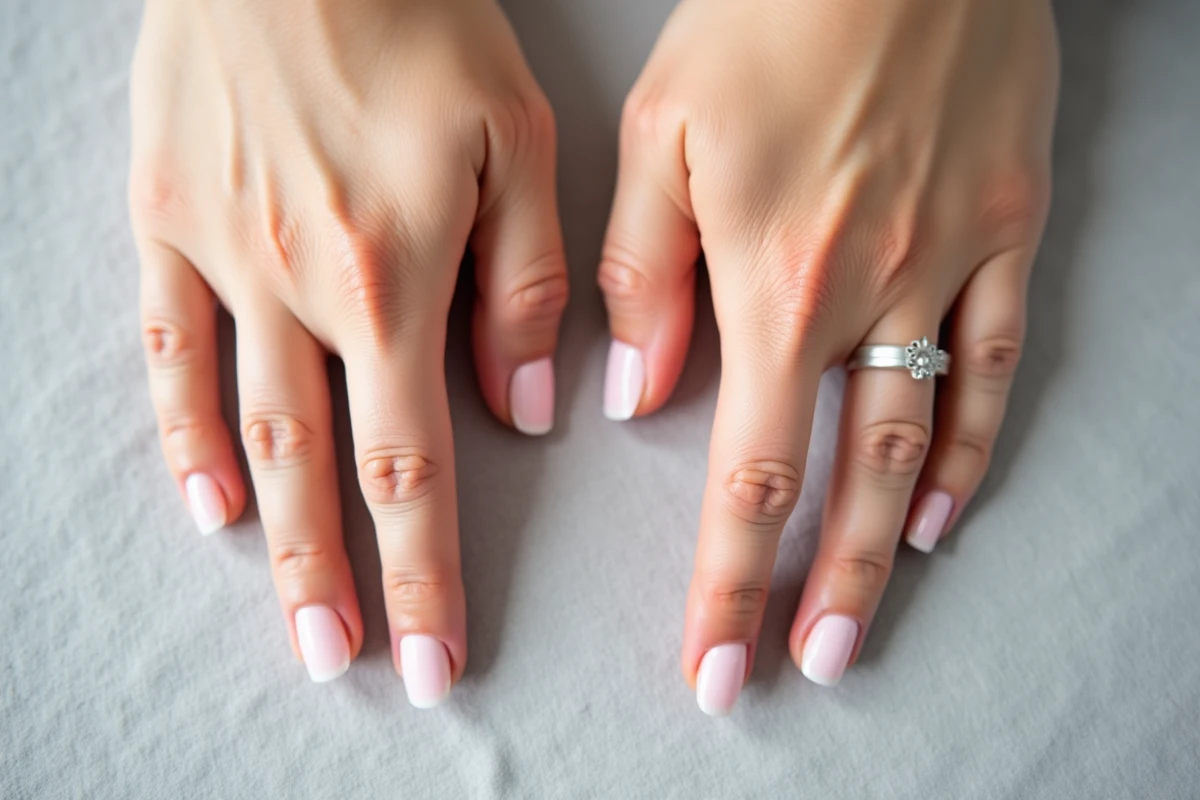
A nail that becomes white, brittle, and sensitive after several successive applications may also reveal a contact allergy. Acrylic resins (notably HEMA and di-HEMA TMHDC) present in most semi-permanent gels are among the most common contact allergens in nail cosmetics.
The reaction does not always manifest with the first application. A gradual sensitization may occur after months of use without issues. The associated signs go beyond simple whitening: redness around the nail, itching of the cuticle, or even eczema of the fingers.
Dermatologists recommend in this case a allergy assessment through patch tests, not just leaving the nails without polish. Identifying the specific allergen allows for determining whether a return to semi-permanent is feasible with a different formulation or if it should be abandoned permanently.
Recovery care for whitened nails after semi-permanent
Once fungal infection and allergy are ruled out, the recovery of a nail whitened by dehydration relies on simple but regular actions.
- Apply a vegetable oil (castor, jojoba, sweet almond) on the nail and cuticles morning and evening. The oil penetrates the superficial layers of keratin and restores their flexibility.
- Avoid any aggressive buffing or filing on a nail that is already thinned. Polishing only removes more material.
- Space out semi-permanent applications by at least two to three weeks to allow the plate to regenerate. The matrix produces a complete nail over several months: forcing the application rate prevents recovery.
- Prefer specific gel removers over pure acetone during removal, and reduce soaking time to the minimum necessary.
A nail whitened by dehydration will regain its normal appearance over time as it grows, without medical treatment. Patience remains the main factor: no topical treatment can significantly accelerate the growth rate of keratin.
The real warning sign, which justifies a consultation, remains a whitening that persists for several weeks despite stopping the semi-permanent, accompanied by thickening, detachment, or a change in the texture of the nail. In these cases, the problem goes beyond cosmetics and requires a dermatological opinion.